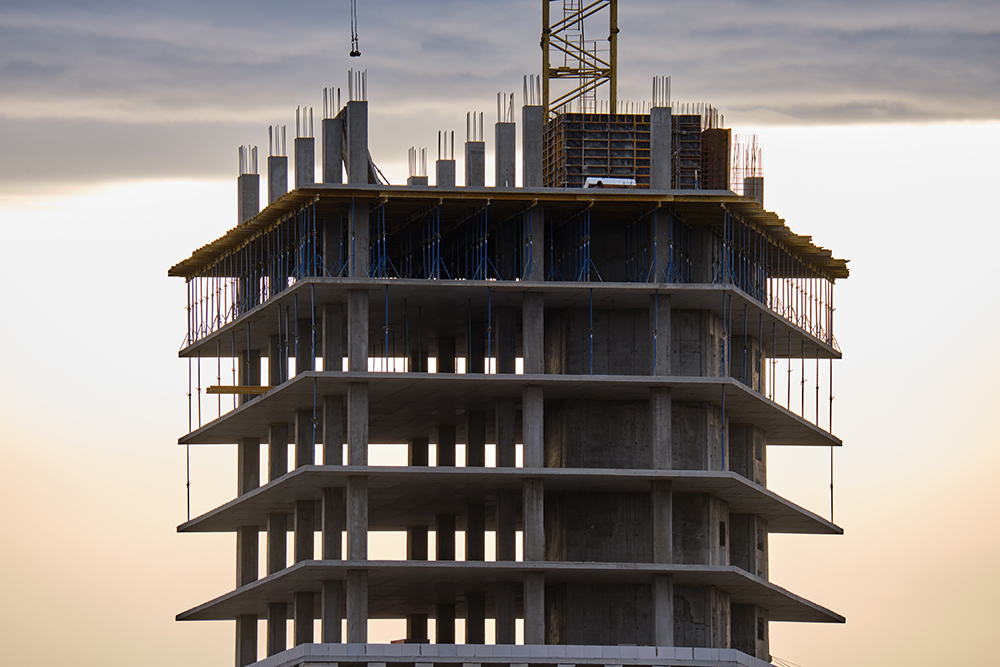
It’s a milestone, but not necessarily one that will be music to commercial investors’ ears. For the first time in at least 25 years, more office space is being converted or demolished than being constructed. It’s a testament to shifts in demand as well as the herald of uncertain economic times. But a closer look reveals that the stalling out of office construction in favor of conversion projects could actually be beneficial to commercial investors when we look at the larger picture.
Details of the CBRE Report

When CBRE Group, a commercial real estate services company, released its report illustrating the tipping scales of new office construction versus office space demolition and repurposing, it was mostly confirming what those even casually observing the commercial real estate sector already suspected. The footprint of office space couldn’t grow forever, but it’s now actually shrinking. While the report accounts for this being the first case of office space shrinkage in a quarter of a century, it’s likely that it’s been even longer since we’ve seen new office construction outpaced by removal.
CBRE has been closely monitoring the fluctuations in new office construction and repurposing since 2018. In 2025, 23.3 million square feet of office space spanning nearly 60 of the country’s biggest markets has been marked for demolition or conversion before the year is out. By comparison, only 12.7 million square feet of new office space is being developed in the same markets.
The Shifting Need for Office Space
Office space got a trajectory-shifting jolt in 2020 with the COVID-19 pandemic sending the majority of office workers into a mandatory work-from-home structure. But even in the wake of the pandemic, office vacancies are roughly holding steady at around 19%. That number could be decreasing soon as businesses continue demanding that staff return to a full-time office presence without remote work options. This is likely further exacerbated by an increasingly more competitive job market where prospective employees are more likely to accept in-person roles in exchange for steady income.
Demand Still Exists for Office Space

However, signs of recovery, albeit a slow recovery, are already beginning to register. In the first quarter of 2025, office leases rose by 18% when compared to the first quarter of 2024. Likewise, net absorption, or the ratio of freshly occupied office space versus vacant office space, has lurched back into the positive column for the last four quarters as opposed to a six-quarter consecutive stretch of negative placements. So, while inventory may be diminishing, demand certainly isn’t.
While a decreasing amount of new office space may seem like bad news for commercial investors, it’s more likely that it’s a helpful development. With demand beginning to build up again and supply diminishing, rent for office space appears to be settling into stability.
Altered Trends in New Office Construction
Another reason that investors shouldn’t be too alarmed by this trend is that the office space marked for conversion or demolition is typically of a quality that wouldn’t be considered competitive in light of changing demands. Yes, office space rent is recovering… but almost exclusively for Class A properties. With these changes underway, investors can look forward to lower vacancy rates for office buildings as stagnant properties are gradually repurposed and new construction adheres to tenant demand.

Demand is also shifting to mixed-use properties that offer more diversity than a strict office block. These mixed-use spaces offer office and corporate areas as well as other commercial classes such as retail and restaurants. Because of the shifting emphasis on mixed-use spaces, more than half of planned conversions are focused on struggling business districts that just can’t match the versatility.
Change Moves Slowly
Investors should also keep in mind that this is a slow transition. Economic uncertainty, tariffs, higher interest rates, and supply chain issues are all contributing significant challenges to conversions and new construction alike. Change isn’t coming; it’s here. But it’s still moving slowly. And, ultimately, if you’re a commercial real estate investor, it’s moving toward your best interest.