
What do you consider first when it comes to property investment? If you’re like most investors, your mind typically turns to cap rates, rent rolls, and, of course, location. But there’s an often overlooked factor that, if not carefully considered, could make or break a commercial deal. That factor is the parking ratio. And, if you’re unfamiliar, here’s your chance to get a better understanding of this vital consideration.
What is a Parking Ratio?

Parking ratio is a measurement that compares the number of parking spaces available on a property to its gross leasable area (GLA). This figure is typically expressed per 1,000 square feet. Therefore, a 20,000-square-foot office building with 100 parking spaces would hold a ratio of five parking spaces per 1,000 square feet. That may seem like a small figure. But commercial office buildings frequently have four or fewer parking spaces per 1,000 square feet. It’s worth noting that tenants often prefer a higher ratio of five or six spaces per 1,000 square feet. This is especially true of retail and high-traffic properties.
The Cost Can Take Investors by Surprise
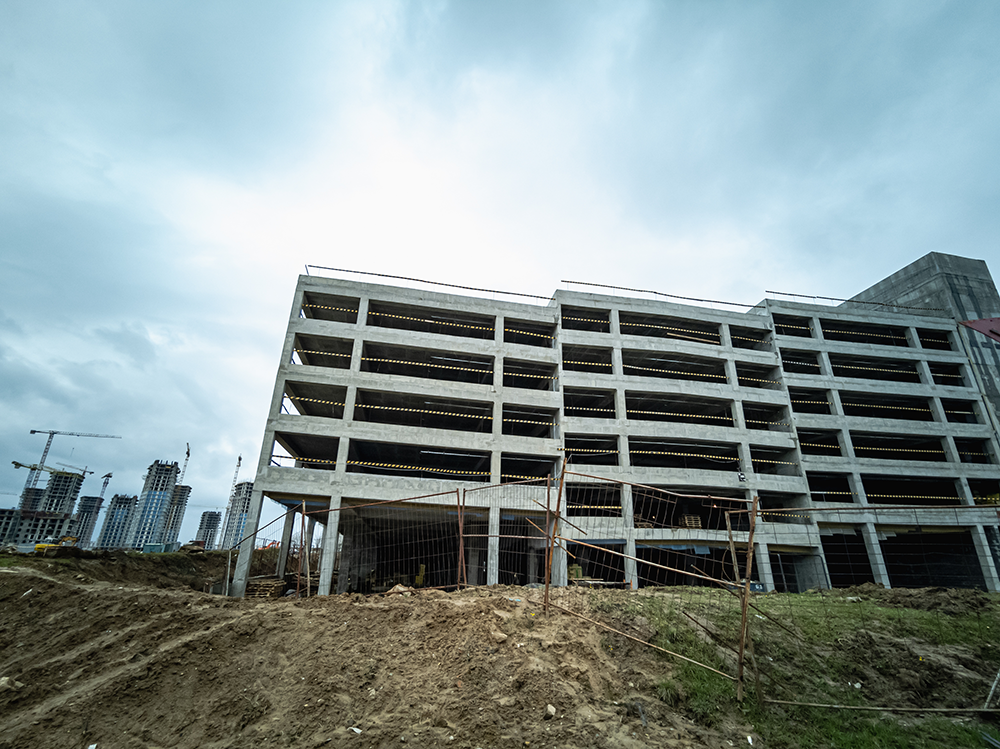
Of course, parking comes at a cost. But that cost can take even a veteran of property investment by surprise. Surface lots often come at a construction cost of $2,000 to $6,000 per parking space. Structured parking, such as garages, can cost an investor $12,000 to $25,000 per space. Run those numbers, and you’ll see how a 100+ space project can easily amass a six- or seven-figure expense before a single tenant ever becomes involved. And those parking spots directly take from land that could be otherwise used for revenue-generating space.
Then, there’s also the vital consideration of legal compliance. The Americans with Disabilities Act demands a minimum ratio of accessible spaces (one per 25 spots for the first 100 spaces, with scaling afterward). In California, you’ll also find EV-charging infrastructure requirements courtesy of the state’s CALGreen building code. While it’s possible to pass on the common area maintenance (CAM) expenses for maintaining parking lots to tenants, this will all boil down to the tenants’ lease structures.
How Parking May Be Changing Property Investment in LA
However, parking requirements in Los Angeles are enjoying a rare reprieve in the wake of Assembly Bill 2097. Having gone into effect on January 1, 2023, AB 2097 prohibits cities and counties from imposing minimum parking requirements on residential, commercial, or mixed-use projects that are within a half-mile of a major transit stop. Even with LA’s public transit shortcomings, the city would easily qualify as a transit-dense area. And new developments within a half-mile of these stops are no longer burdened with any parking mandates. This opens the floor for developers to build minimum parking or none at all. However, for any spaces they do choose to add, they still meet the necessary ADA and EV-readiness restrictions.
But savvy property investment requires careful assessment of the pros and cons of taking this rare opportunity to bypass parking. On the one hand, an investor can utilize more land for leasable square footage and lower upfront costs by simply providing little to no parking. But as stated earlier, tenants value parking. And a commercial property with little to no parking may face challenges when attracting car-dependent tenants and retail customers. In this way, saving upfront could actually cost an investor in the long term with weaker lease terms.
What Does This Mean for Investors?
With parking ratios standing at the nexus of zoning compliance, construction costs, tenant demand, and, in California, shifts in state policy, it’s important for investors to strategize accordingly. Therefore, investors need to do their due diligence before underwriting any commercial property investment projects, familiarizing themselves with local parking requirements and exemptions. Consult your city’s zoning tools to start, then compare the upfront cost of parking construction with the leasing risk that comes with little to no parking. There is no answer that fits all, but careful consideration of this often-overlooked factor can help you avoid surprises down the road.
Note: This article is for general informational purposes and does not constitute legal, financial, or investment advice. Parking requirements vary by jurisdiction and project; consult a qualified professional before making investment decisions.